
Industry
Advanced Manufacturing Validation
Advanced manufacturing compresses process, equipment, analytics and software into a single automated system. That makes conventional stage-by-stage qualification harder — and makes an integrated, risk-based strategy essential.
Continuous manufacturing and PAT
Continuous processes replace discrete batches with material traceability, residence time distribution and real-time control. Validation has to address the diversion logic, the analytical models embedded in control, and the definition of batch itself.
- Process analytical technology model development and lifecycle
- Real-time release testing considerations
- Material traceability and diversion strategy
- Control system and sensor qualification
Robotics and automated handling
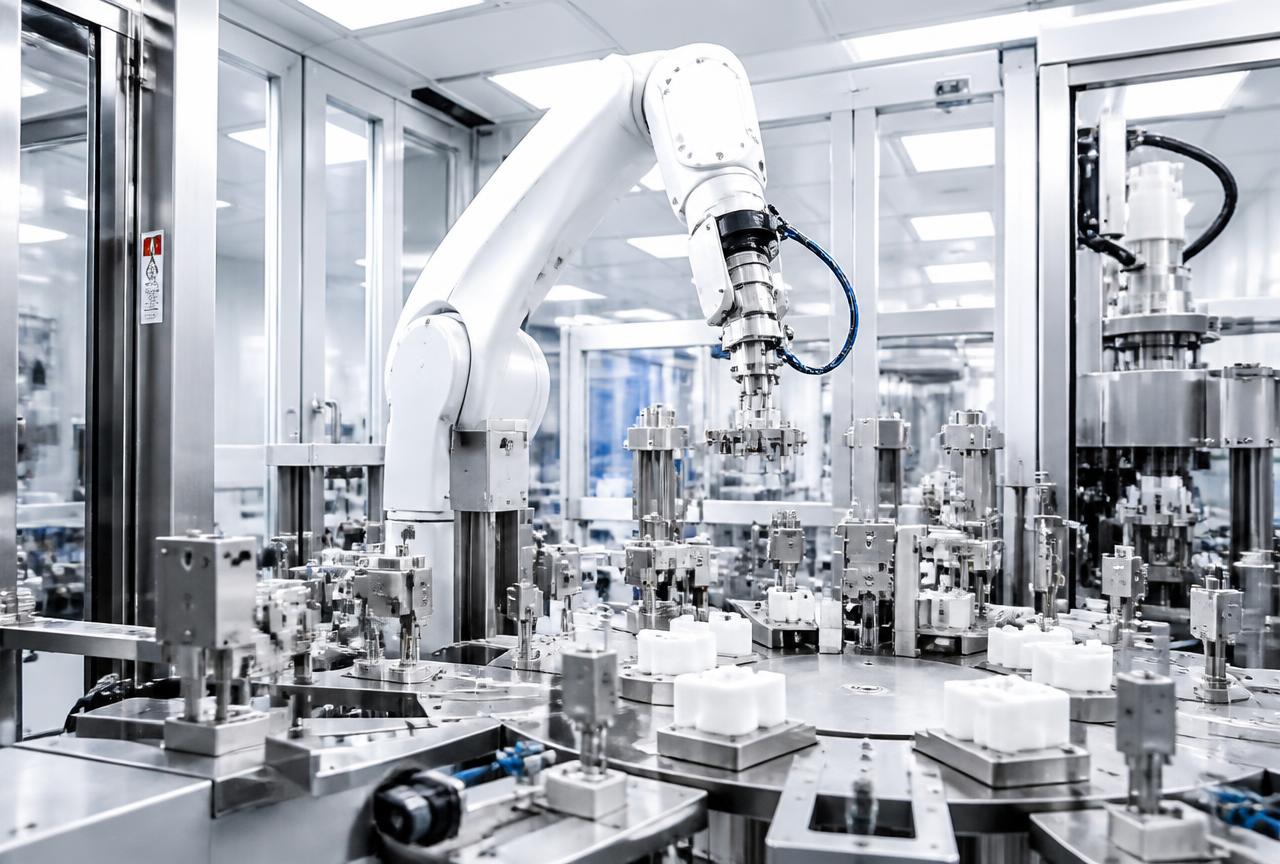
Robotic cells introduce motion safety, repeatability, vision inspection and recipe management into the qualified scope. Performance qualification should reflect real product variability, not idealized test coupons.
Digital plant and data architecture
Historians, digital twins, MES integration and analytics layers all consume and sometimes create GxP records. Mapping which data flows are regulated — and which are engineering-only — prevents both unmanaged risk and unnecessary validation.
Primary references
- FDA — Process Validation: General Principles and Practices
- FDA — Computer Software Assurance for Production and Quality System Software
- FDA — 21 CFR Part 11, Electronic Records; Electronic Signatures
- FDA — Data Integrity and Compliance With Drug CGMP
- FDA — General Principles of Software Validation
Information published on ValidationEngineering.com is educational and informational. It is not legal or regulatory advice and is not a guarantee of regulatory compliance or of any inspection outcome. Organizations remain responsible for their own quality decisions.
Next step
Qualifying an advanced manufacturing platform?
Tell us about the technology and where you are in the program.