Instruments • Informatics • Data
Laboratory Validation & Qualification
The regulated laboratory is where equipment qualification, software assurance and data integrity meet in a single workflow. A result is only as defensible as the instrument that produced it, the software that processed it, and the review that released it.
Analytical instrument qualification
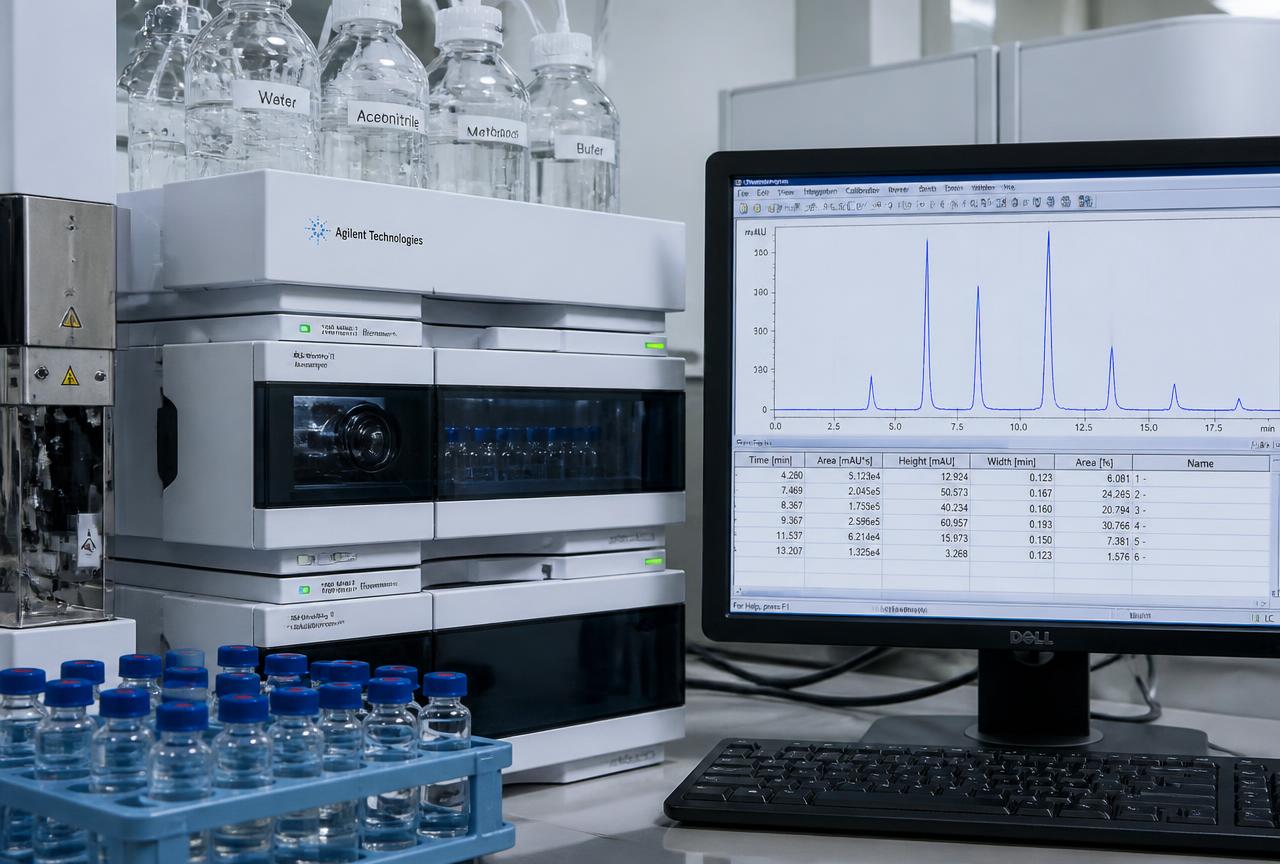
Instrument qualification follows the same DQ/IQ/OQ/PQ logic as production equipment, adapted to analytical performance. Design qualification captures the intended analytical use; installation confirms the configuration; operational qualification challenges modules against performance specifications; performance qualification confirms ongoing suitability under real methods.
- HPLC/UPLC, GC, MS, ICP and detector module qualification
- Dissolution, spectrophotometry, particle sizing, titration
- Balances, pipettes, pH and conductivity meters
- Stability chambers, incubators, freezers and mapping studies
- Autoclaves, washers and depyrogenation ovens
- System suitability as ongoing performance verification
Laboratory informatics
- LIMS — sample lifecycle, specifications, calculations, review and release
- ELN — experiment records, templates, witnessing and versioning
- CDS — acquisition, integration parameters, processing methods, reprocessing history
- Instrument-embedded software and standalone workstations
- Environmental monitoring and sample management systems
- Calibration and asset management interfaces
- Laboratory automation, robotics and scheduling software
Data integrity in the laboratory
Laboratory data integrity risk concentrates in a few recurring places: standalone workstations with local storage, shared logins, analyst-level administrative privileges, unexplained reprocessing, aborted or trial injections, and manual integration without documented justification.
- Unique accounts and privilege separation for analysts and administrators
- Audit trail configuration verified and reviewed on a risk basis
- Complete data — including repeats, aborted runs and reprocessing
- Controlled processing methods and integration parameter changes
- Secure, verified backup and restoration of chromatographic data
Analytical methods and lifecycle
Method validation, transfer and ongoing performance verification sit alongside instrument qualification. A validated method on an unqualified instrument, or a qualified instrument running an unverified method transfer, both produce results that cannot be defended.
Primary references
- FDA — Process Validation: General Principles and Practices
- FDA — Computer Software Assurance for Production and Quality System Software
- FDA — 21 CFR Part 11, Electronic Records; Electronic Signatures
- FDA — Data Integrity and Compliance With Drug CGMP
- FDA — General Principles of Software Validation
Information published on ValidationEngineering.com is educational and informational. It is not legal or regulatory advice and is not a guarantee of regulatory compliance or of any inspection outcome. Organizations remain responsible for their own quality decisions.
FAQ
Instruments • Informatics • Data — common questions
- What is the difference between instrument qualification and method validation?
- Qualification demonstrates the instrument is fit and performing to specification (USP <1058> DQ/IQ/OQ/PQ). Method validation demonstrates the analytical procedure is suitable for its intended purpose, covering accuracy, precision, specificity, linearity, range and robustness (ICH Q2).
- Do CDS, LIMS and ELN systems need Part 11 controls?
- Yes, where they hold GxP records. Focus on user access and roles, audit trail configuration, e-signature manifestation, projects/permissions preventing reprocessing without trace, and backup and restore verification.
- Can vendor IQ/OQ services replace your own qualification?
- They can form the bulk of the evidence, but the laboratory still owns the intended-use assessment, the acceptance criteria against its own methods, and PQ under routine conditions.
Next step
Need laboratory validation expertise?
Instruments, informatics, methods or a full laboratory startup — tell us what you are validating.